
Dr. Ian Polyzois:
Finding Purpose Through Innovation and People
Ian Polyzois didn’t take a straight path into his career—he followed curiosity, innovation, and, above all, people.
As a child, Ian dreamed of becoming a fighter jet pilot. The idea took hold at a career fair, where posters and recruiters opened his eyes to a world of cutting-edge technology and possibility.
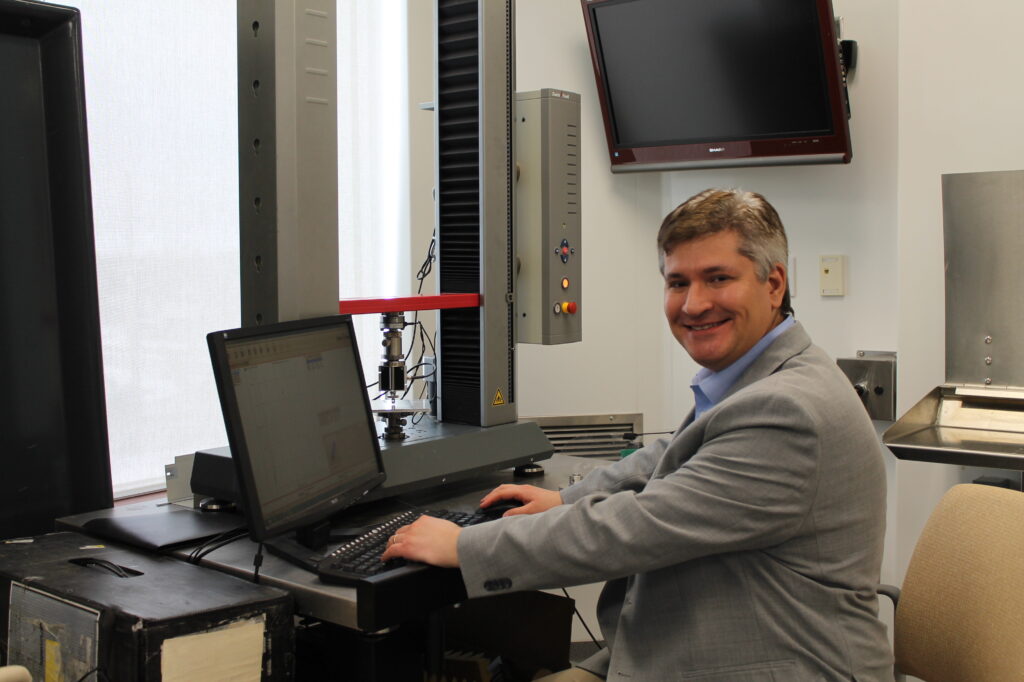
Ian Polyzois didn’t take a straight path into his career—he followed curiosity, innovation, and, above all, people.
As a child, Ian dreamed of becoming a fighter jet pilot. The idea took hold at a career fair, where posters and recruiters opened his eyes to a world of cutting-edge technology and possibility.
It was a dream rooted in excitement, but also in a fascination with how things work.
Over time, that path evolved. Ian adjusted course, choosing to pursue mechanical engineering as a way to stay connected to innovation while building something more tangible.
At the University of Manitoba, he developed a strong academic foundation, guided not only by his studies but by his family.
His father, a civil engineer, and his mother, a child psychologist, instilled in him a deep respect for both hard work and understanding people—values that would quietly shape his career.
After graduating, Ian’s work took him far from home, from Quebec City to Texas. He contributed to advanced engineering projects, including aircraft systems and national defense.
The work was fast-paced and technically challenging—but over time, something felt missing.
Despite the complexity and scale of the projects, Ian began to feel disconnected from the people his work was meant to serve.
That realization became a turning point.
As he reconsidered his goals, Ian knew he wanted to make a more direct impact. He shifted into biomedical engineering—a decision that would ultimately define his future.
“I guess I followed where the science was, where the innovation was,” Ian reflects. “And I knew material science could branch beyond mechanical. And it did.”
With that shift came a return to Manitoba, bringing his journey full circle.
What began as a fascination with flight had evolved into a deeper purpose: improving lives through engineering.
“I thought to myself, the best way to learn is to move laterally—take what you know and find an adjacent area of study that can build on it.”
In December 2019, Ian joined the Orthopaedic Innovation Centre (OIC) as an engineer specializing in computer simulation.
Supported by federal NGen funding, his role quickly expanded beyond technical work. He became involved in financial planning, project management, and client relationships—but what mattered most was finding a team that felt like family.
“I remember Trevor interviewing me,” Ian says. “It felt personal. I really appreciated that.”
At OIC, Ian’s work took on new meaning.
He specializes in simulating medical implants—knees, hips, spines, and custom pediatric plates—testing designs virtually before they are ever built.
Using computational modelling, Ian can simulate how bones, joints, and implants behave under real-world conditions. It’s a powerful tool that is transforming how implants are developed—making them more precise, more personalized, and ultimately more successful.
But for Ian, the work goes beyond technology.
Through detailed analysis and simulation, he identifies potential issues before they happen, helping to save time, reduce costs, and improve outcomes.
It’s a process grounded in both science and responsibility.
He often describes his role as “creating peace of mind.”
Surgeons, clients, and ultimately patients rely on his work to ensure that what is designed will perform safely and effectively.
Whether studying meniscus repair or evaluating implant performance, Ian’s simulations help guide real-world decisions—decisions that directly affect people’s lives.
And sometimes, those lives come into clearer focus.
Ian recalls hearing about a young patient who received a custom implant designed with the help of advanced simulation.
The child had been living with significant pain, struggling with simple movements that most people take for granted. Running, playing, even walking comfortably had become daily challenges.
After surgery, everything changed.
With a properly fitted implant tailored to their anatomy, the child was able to move freely again—returning to school, to play, and to being a kid.
For the clinical team, it was a success.
For the family, it was life-changing.
For Ian, it was a powerful reminder of why his work matters.
While he may never meet every patient, he knows that behind every model is a person—a story, a family, a future.
Over time, Ian came to understand something even more important.
Beyond the data, beyond the models, people are looking for reassurance.
“It’s not just about engineering—it’s about trust. It’s about helping people feel safe, informed, and supported during some of their most vulnerable moments.”
For Ian, that purpose is clear: to help people feel confident in the care they receive.
And that’s what continues to drive him.
Because beyond the technology, beyond the innovation, it’s the human impact that matters most.
Whether it means helping someone walk without pain or return to a sport they love, the goal remains grounded in everyday life.
At the end of the day, it’s not about the model.
It’s about the person it helps.
The OIC is a partner of the Concordia Arthroplasty Research Chair, which is sponsored by the Concordia Foundation.
We are proud of the exceptional work of the OIC team.